
BLOG
-
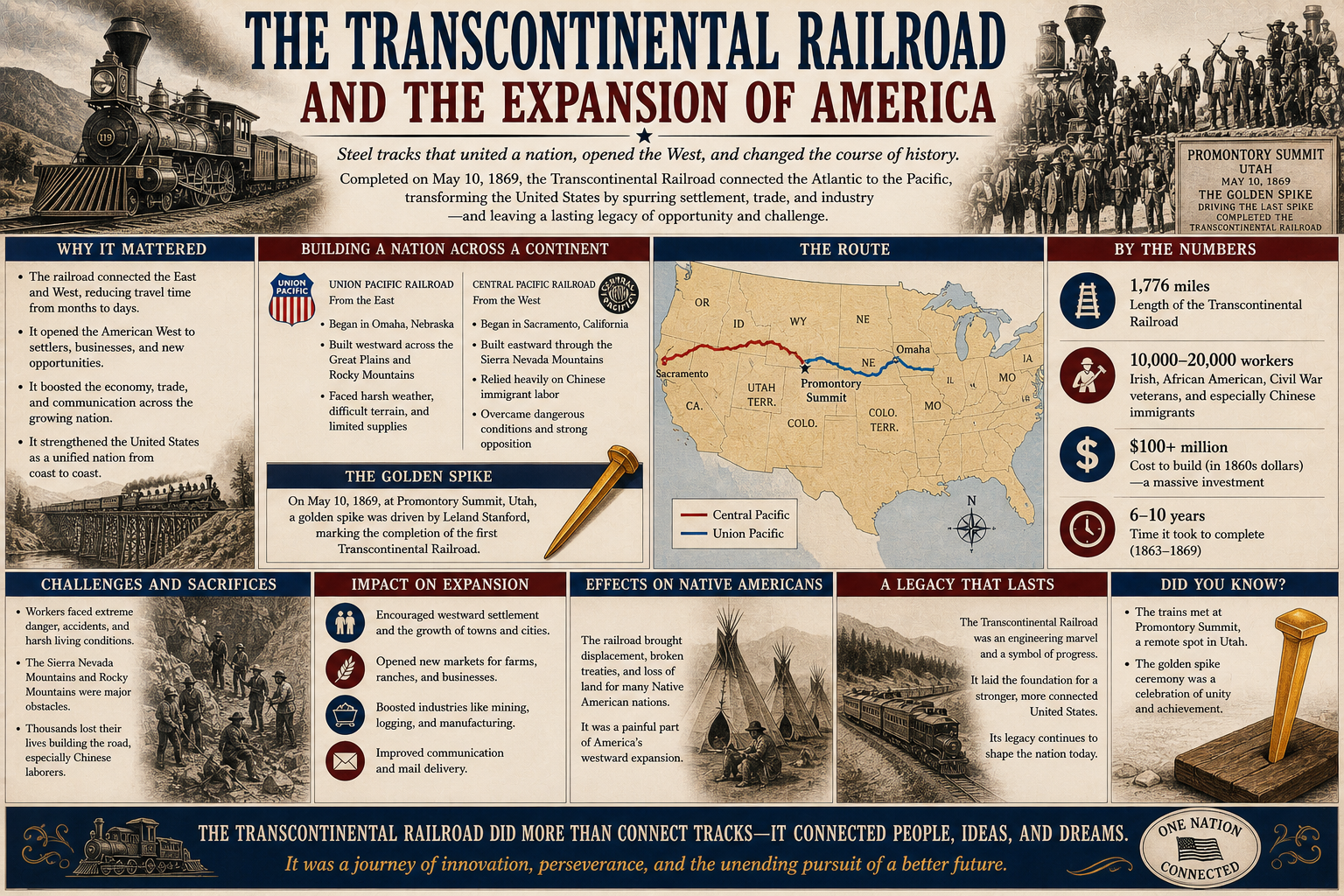
The Transcontinental Railroad and the Expansion of America
The Transcontinental Railroad was one of the most important transportation projects in American history. Completed in 1869, it connected the eastern United States with the Pacific Coast and dramatically changed the way people, goods, and information moved across the country. Before the railroad was completed, traveling from the East Coast to California could take weeks…
-
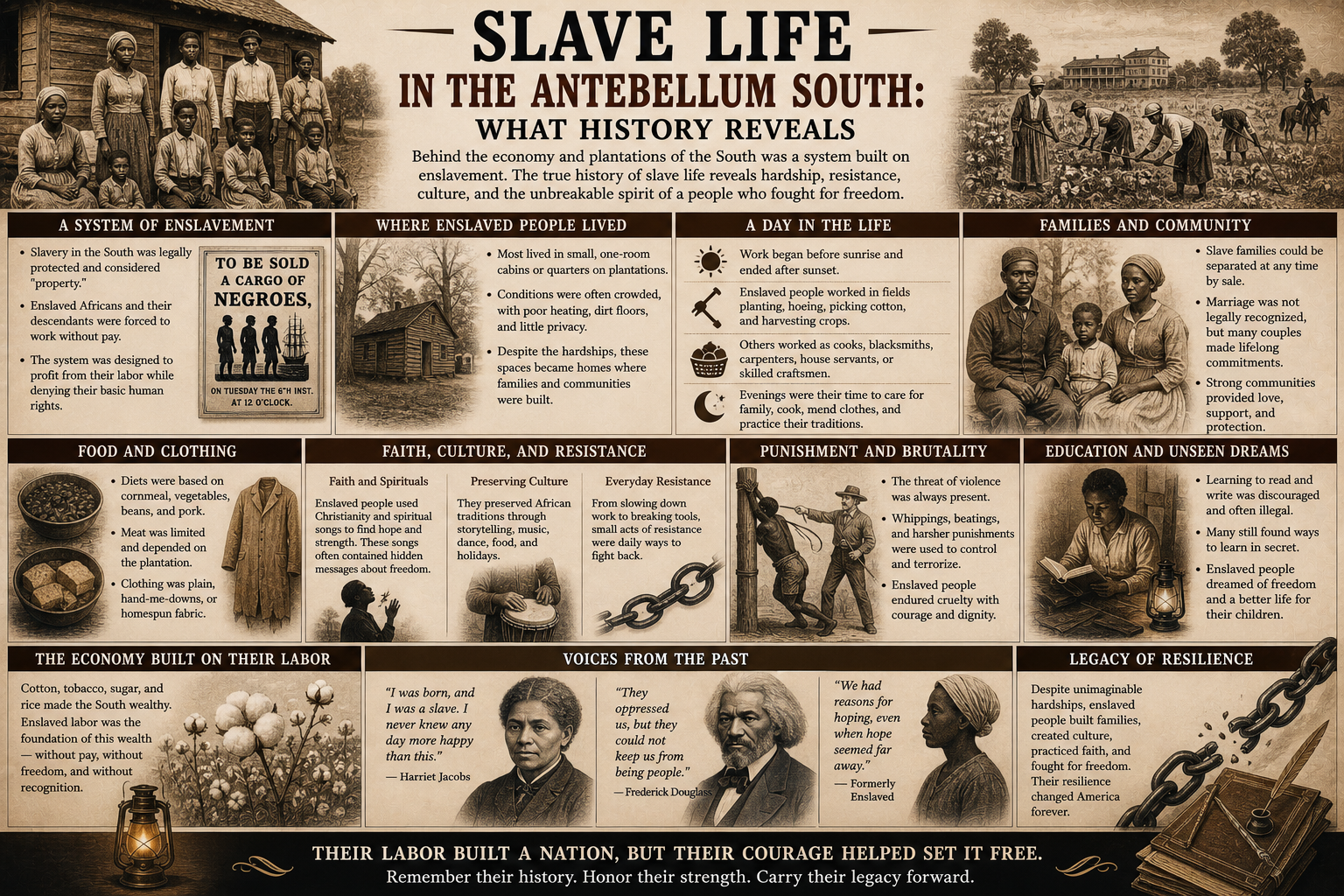
Slave Life in the Antebellum South: What History Reveals
The history of slavery in the American South is an essential part of understanding the United States before the Civil War. For generations, millions of African Americans were held in slavery and forced to work without freedom or control over their own lives. The word “antebellum” simply means “before the war.” In American history, the…
-
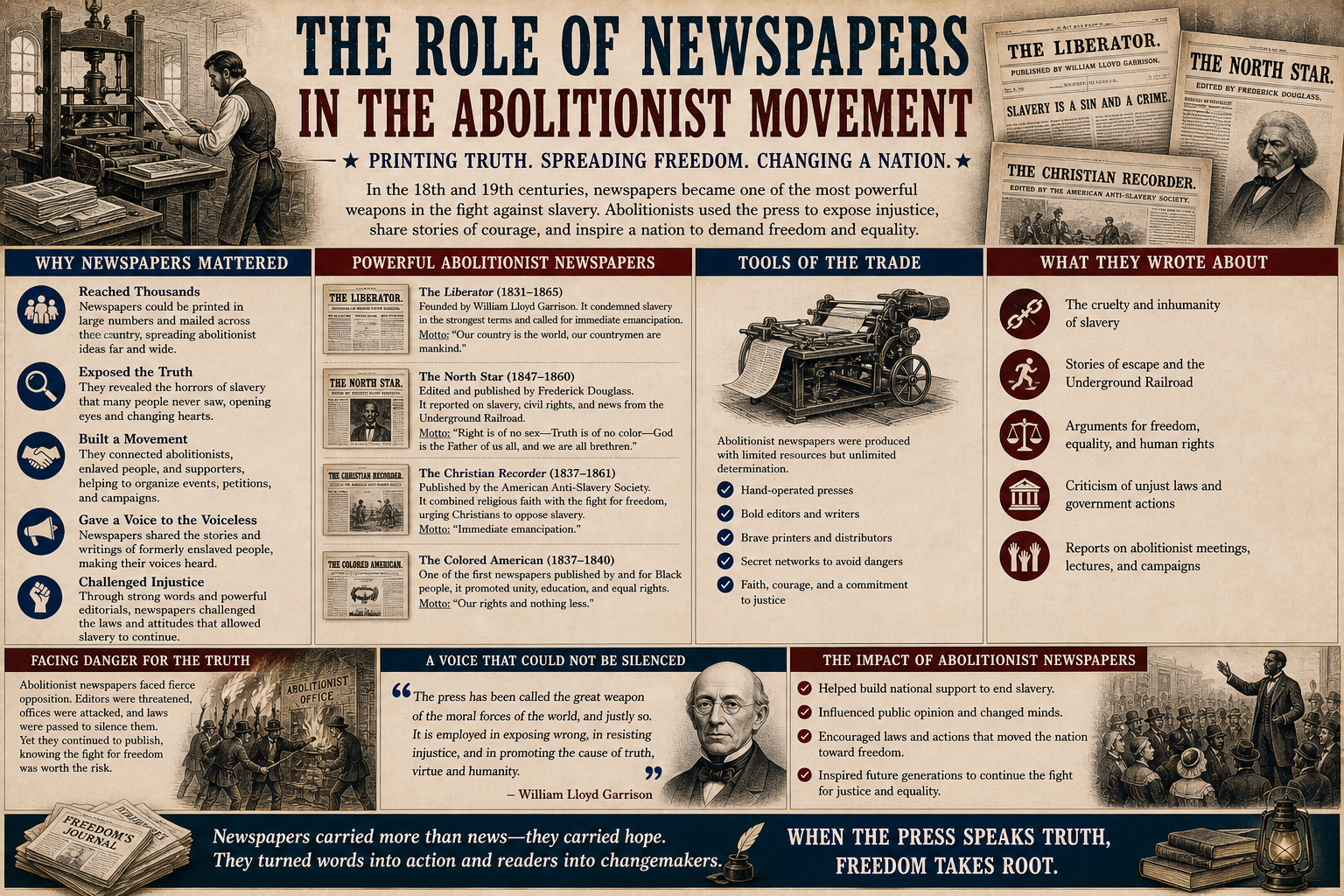
The Role of Newspapers in the Abolitionist Movement
Before television, radio, and the internet, newspapers were among the most powerful ways to spread information in the United States. During the nineteenth century, newspapers played an important role in shaping public opinion and influencing political debates. This was especially true during the abolitionist movement, the campaign to end slavery in the United States. Abolitionist…
-
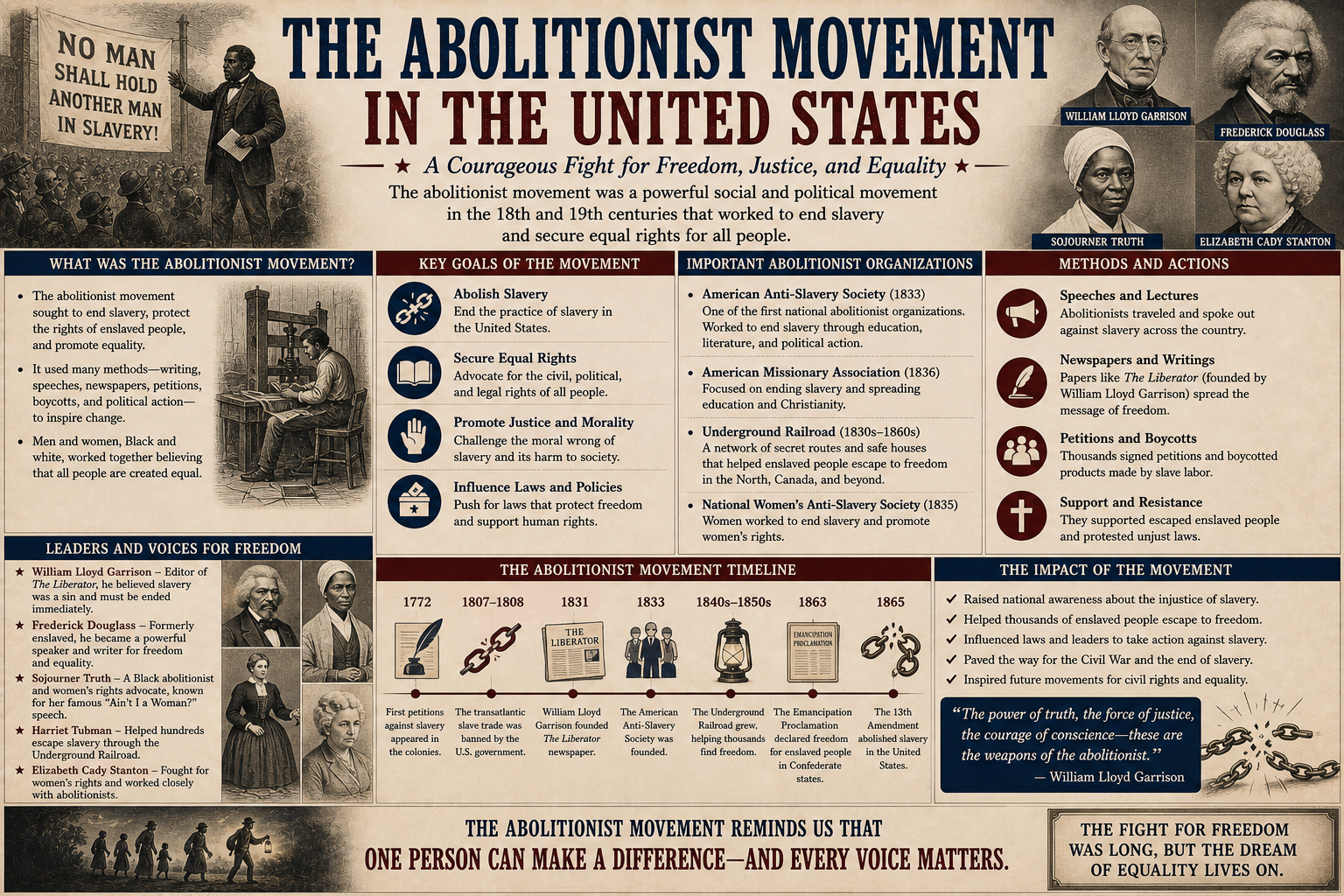
The Abolitionist Movement in the United States
The abolitionist movement was one of the most important reform movements in nineteenth-century American history. Abolitionists were people who wanted to end slavery in the United States. They came from different backgrounds and used different methods, including newspapers, speeches, books, petitions, political campaigns, religious activism, and direct assistance to people escaping slavery. The movement did…
-
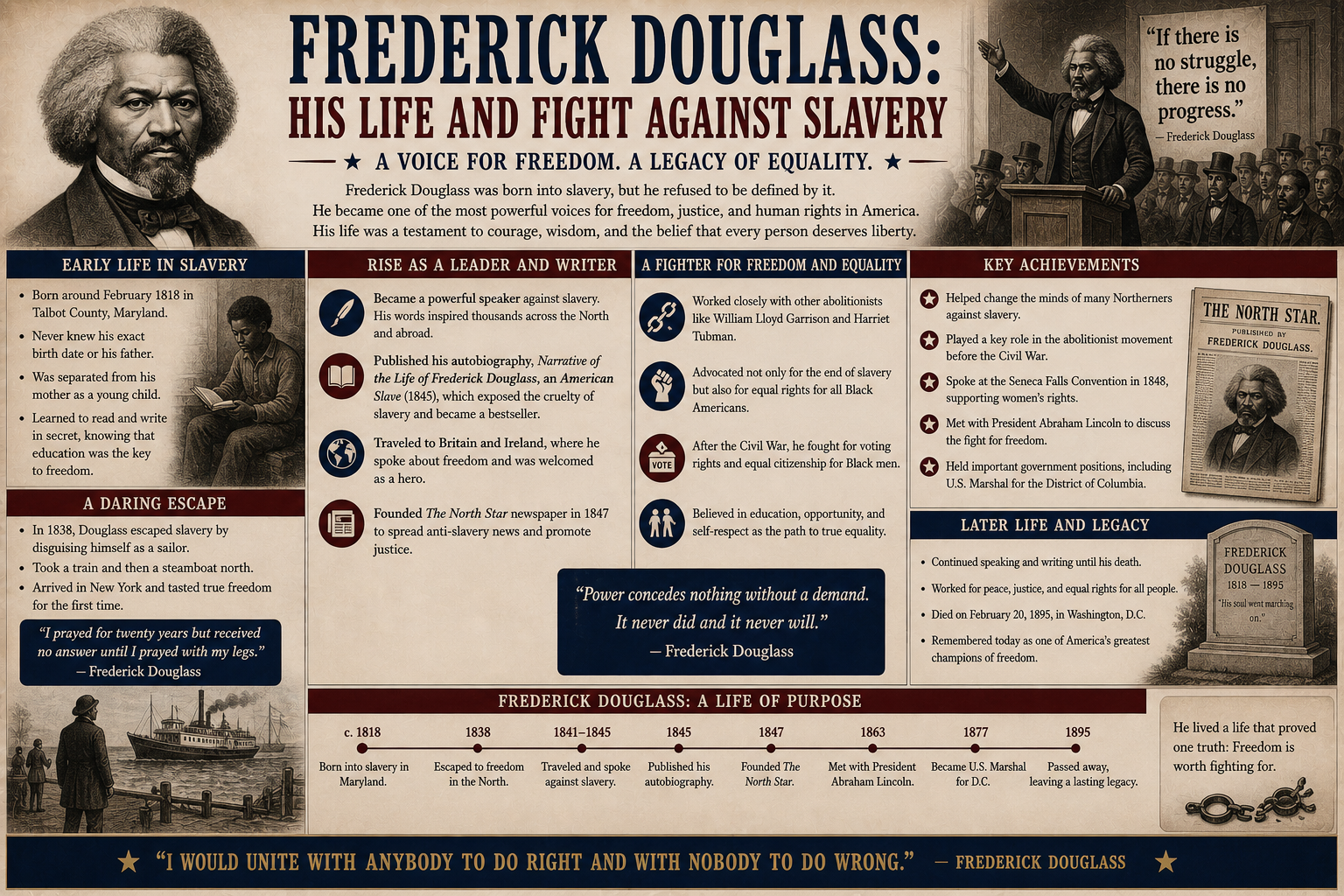
Frederick Douglass: c Against Slavery
Frederick Douglass was one of the most influential African American leaders of the nineteenth century. Born into slavery, he escaped to freedom and became a powerful writer, speaker, abolitionist, and advocate for equality. At a time when enslaved people were often denied education and treated as property, Douglass used his ability to read, write, and…
-
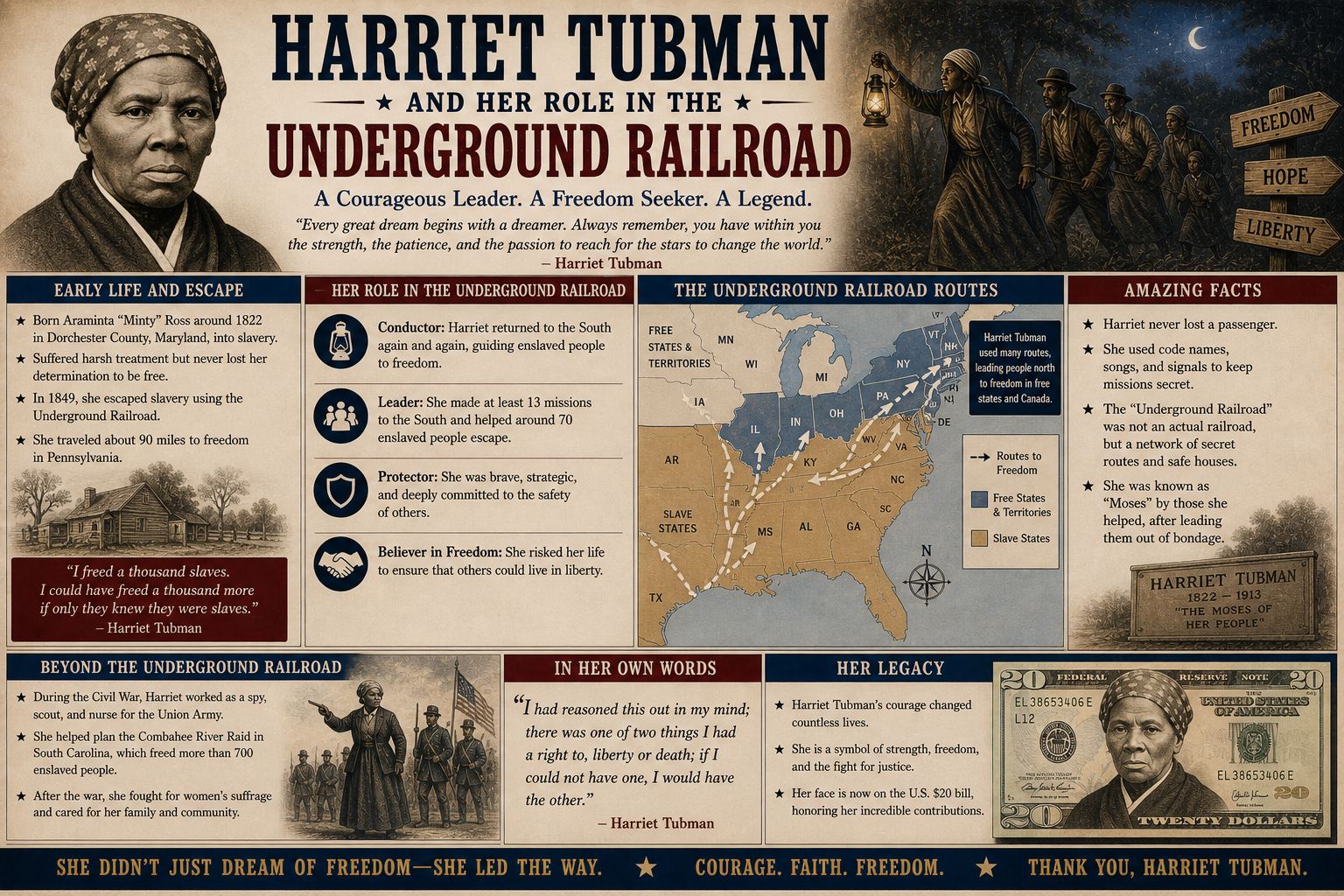
Harriet Tubman and Her Role in the Underground Railroad
Harriet Tubman is one of the most famous figures in American history. Born into slavery, she escaped to freedom and then repeatedly returned to the South to help other enslaved people escape. Her courage, determination, and willingness to risk her own life made her an important figure in the Underground Railroad and the broader struggle…
-
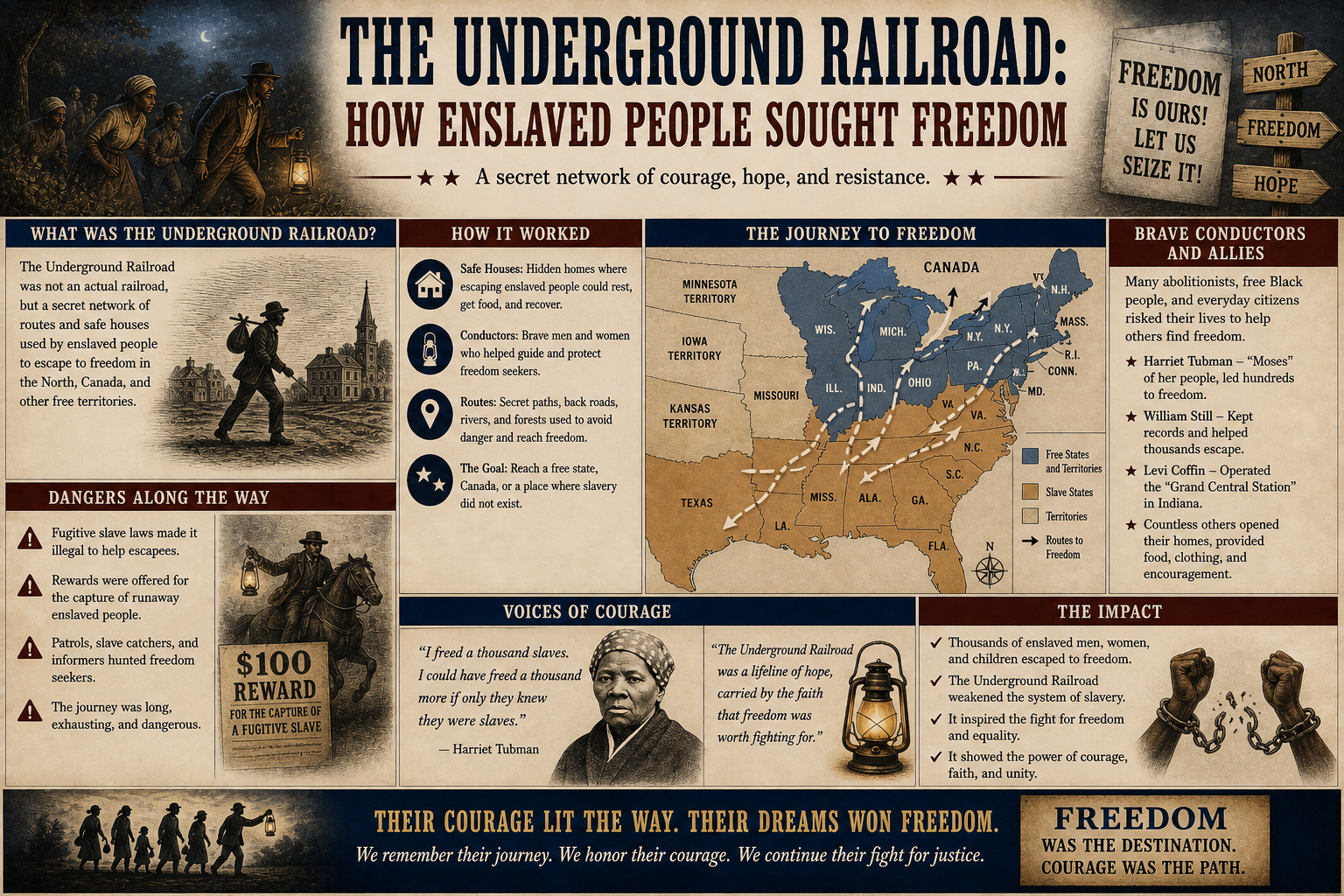
The Underground Railroad: How Enslaved People Sought Freedom
The Underground Railroad was one of the most remarkable resistance movements in American history. It was not an actual railroad, and it did not operate underground in the literal sense. Instead, it was a secret network of people, homes, churches, communities, and routes that helped enslaved people escape from slavery and move toward places where…
-
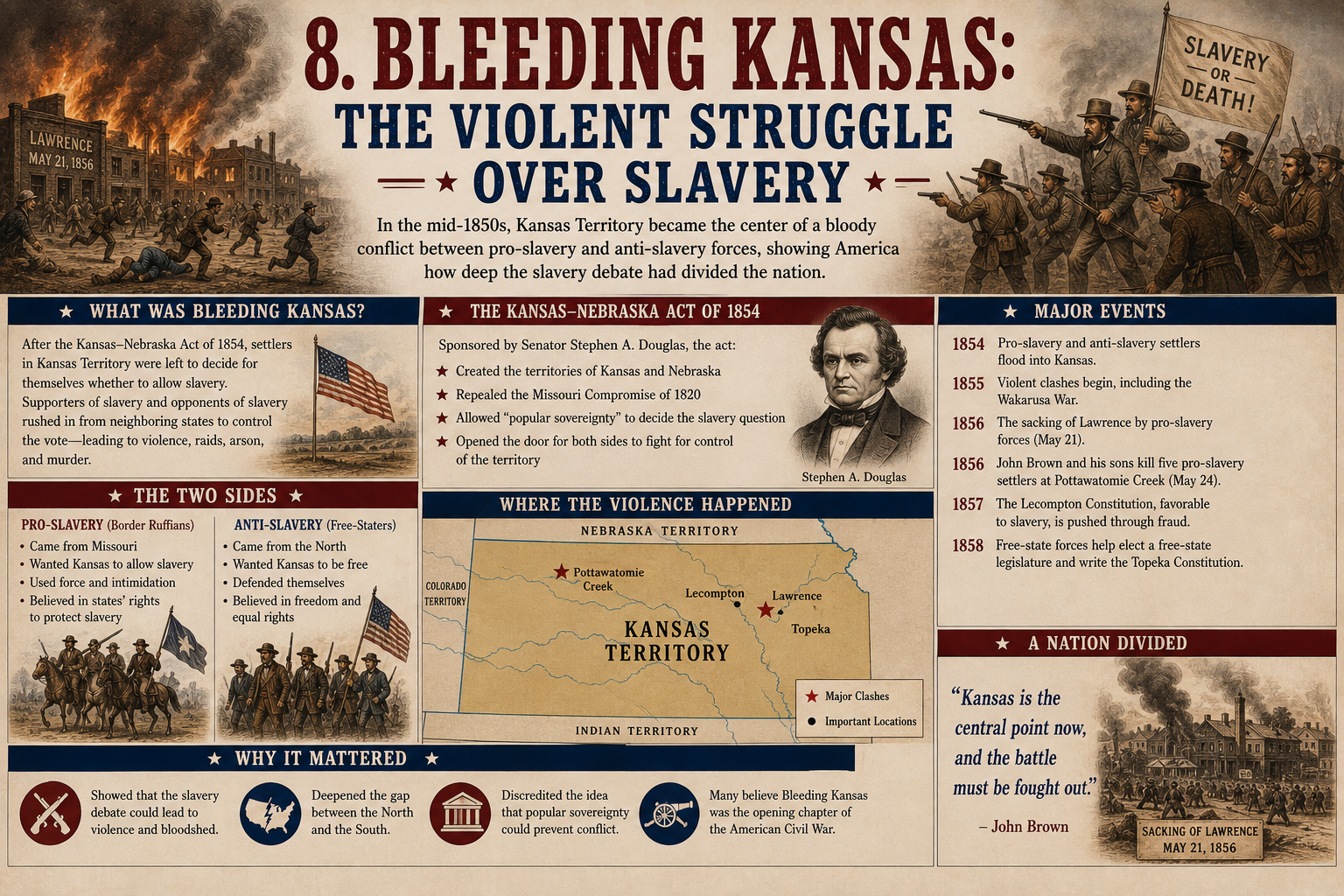
Bleeding Kansas: The Violent Struggle Over Slavery
In the years before the American Civil War, few places represented the country’s growing division more clearly than the Kansas Territory. During the 1850s, Kansas became the scene of political conflict, armed violence, disputed elections, and bitter arguments over slavery. The struggle became known as Bleeding Kansas. At first, the conflict was supposed to be…
-
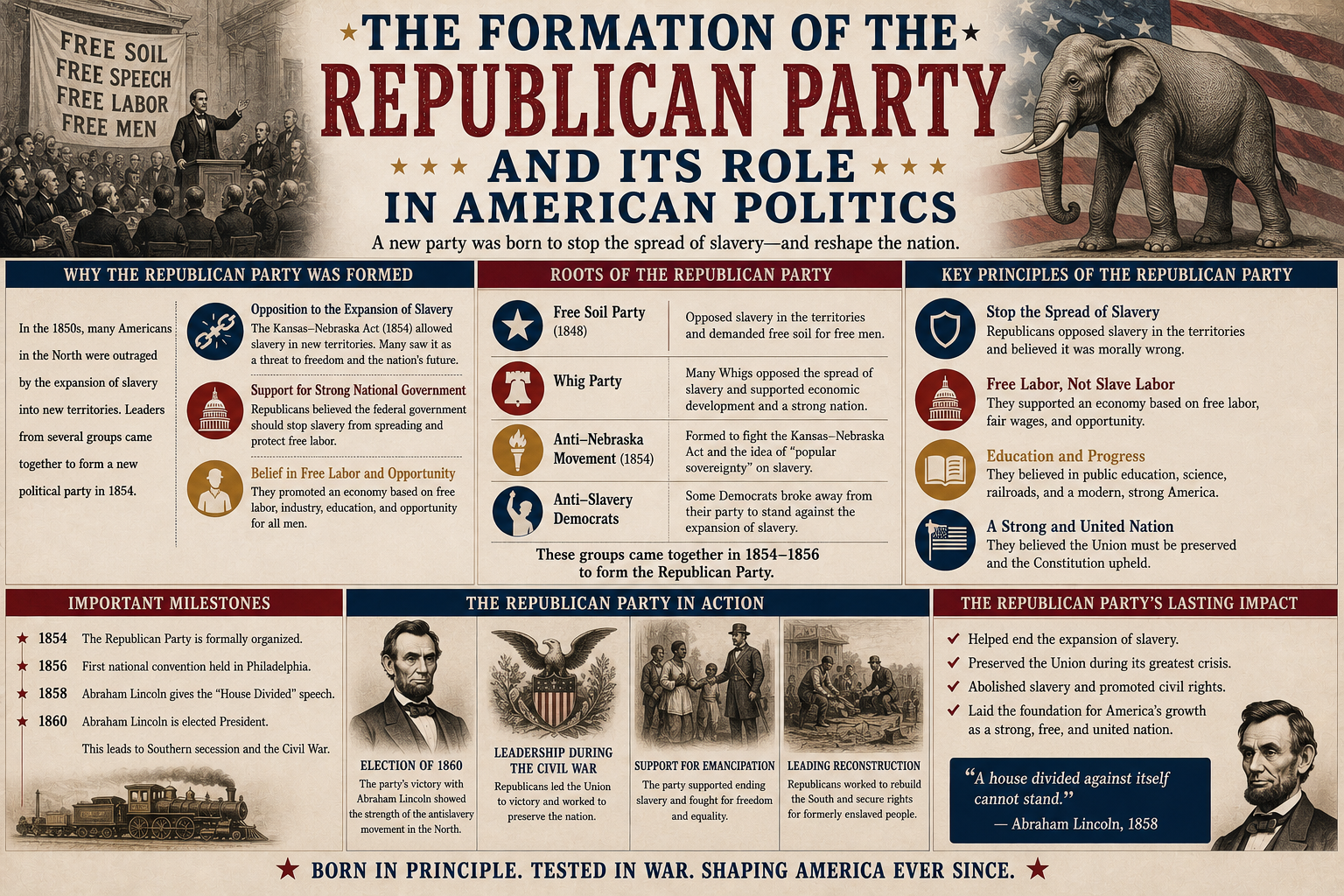
The Formation of the Republican Party and Its Role in American Politics
The Republican Party is one of the two major political parties in the United States today, but its origins are closely connected to one of the most important conflicts in American history: the debate over slavery. The party was formed in the 1850s during a period of intense political change. Its emergence reflected growing opposition…
-
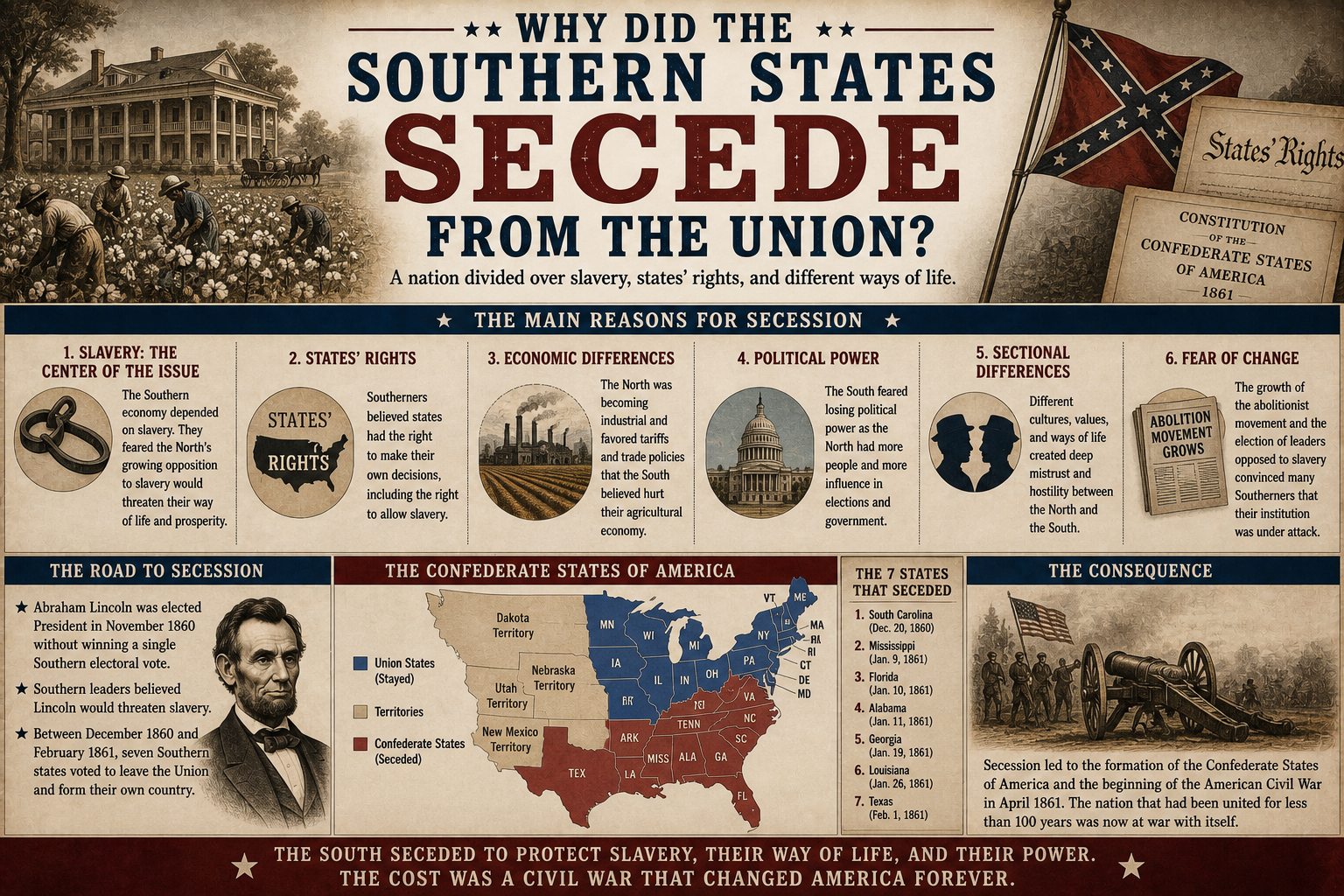
Why Did the Southern States Secede From the Union?
The secession of the Southern states was one of the most important events in American history. Between December 1860 and June 1861, eleven Southern states left the United States and formed the Confederate States of America. Their decision came after decades of political and social conflict, especially over slavery and its expansion into new territories.…